How We Made The Absurdist of Kathmandu One of Kathmandu Valley’s Most Recognizable Books of 2023
The visibility of The Absurdist of Kathmandu was not accidental. SPH built a concentrated campaign across bookstores, cafés, book communities, reviewers and media so that, for a period in 2023, readers across Kathmandu Valley seemed to encounter the book everywhere.
A book can be published in a day. Making it feel present in a city is a different undertaking.
When Samman Publishing House worked on The Absurdist of Kathmandu, our ambition extended beyond printing, distribution and a launch. We wanted to create recognition: the feeling that wherever a reader interested in books went in Kathmandu Valley, there was a reasonable chance they would encounter the title again.
That required repetition across different environments. A bookstore display alone could create retail visibility. A review could create credibility. A café placement could create familiarity. Book clubs could create conversation. Social reviewers could create repeated exposure. Our strategy was to make these channels reinforce one another at roughly the same time.
First, we wanted the book to become difficult to miss
The physical bookstore network was the foundation of the campaign. The Absurdist of Kathmandu was placed in major bookstores across Kathmandu, Lalitpur and Bhaktapur, with the book simultaneously receiving featured or prominent display placement across those stores for more than a month.
Major bookstores across Kathmandu, Lalitpur and Bhaktapur carried the title, with concentrated featured and display placement during the campaign.
That concentration mattered. Distribution by itself does not create visibility: a book can technically be available while remaining almost invisible on a shelf. Our objective was therefore not simply to make the book purchasable. We wanted it to occupy visible retail space during the same period across the Valley.
For readers moving between bookstores, this produced an important psychological effect. The book was no longer something they had encountered once. It was something they kept encountering.
Then we took the book outside bookstores
Books compete for attention long before a reader enters a bookshop. We therefore extended the campaign into places where Kathmandu’s readers, professionals, students and creative communities naturally spent time.
The book was placed on display in more than 20 strategically selected cafés across Kathmandu. These were not conventional retail placements. Their purpose was visibility: allowing the cover and title to become familiar in everyday social environments.
Strategic café locations in Kathmandu displayed the book during the campaign.
The logic was simple. If someone saw The Absurdist of Kathmandu in a bookstore, then encountered it again at a café, then later noticed someone discussing it online, those exposures compounded. None needed to carry the entire campaign by itself.
We created a wide circle of independent conversation
At the same time, SPH distributed the book to approximately 30 Bookstagram reviewers. The objective was not merely to collect a handful of promotional posts. It was to put the book into the hands of many people who were already participating in Kathmandu and Nepal’s reading culture and allow multiple independent voices to engage with it.
Copies were distributed for review across a broad network of book-focused creators.
This gave the campaign something paid promotion struggles to manufacture convincingly: distributed social proof. Instead of the publishing house repeatedly telling readers that the book mattered, readers could encounter the book through different reviewers, accounts and perspectives.
We put the book into reading communities, not only media channels
Major book clubs in Kathmandu also received the title. This was an important part of the strategy because recognition and readership are not identical. Visibility may make someone remember a cover; communities give a book the possibility of becoming a subject of discussion.
Book clubs allowed the campaign to move from exposure toward conversation. They put the book in environments where literature was already being read, debated and recommended person to person.
Editorial attention added another layer of legitimacy
The campaign also reached established media. The Absurdist of Kathmandu was reviewed by editors associated with Kantipur Media and received a review in The Kathmandu Post.
For the campaign, this served a different function from Bookstagram or café placement. Social reviewers created breadth. Physical placement created familiarity. Established editorial coverage provided a form of literary and cultural validation that could sit alongside those channels.
The important part was not treating any one of these as the campaign. They were layers of the same campaign.
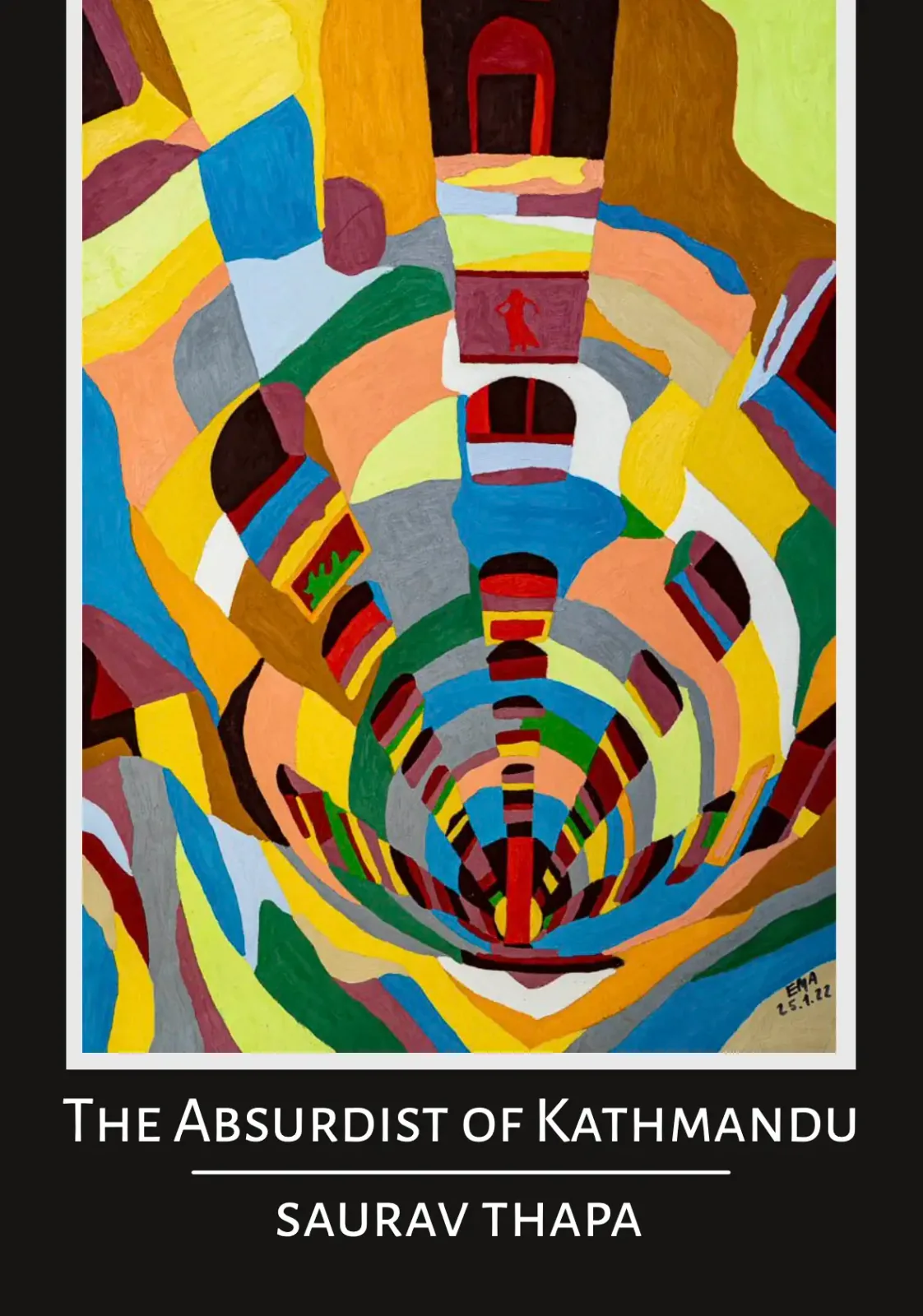
The cover itself became part of the book’s journey
The book’s visual identity also had a life beyond Nepal. Its cover artist, Enrique Muratore Aprosio, had travelled to New York for an exhibition connected with Times Square and took copies of The Absurdist of Kathmandu with him.
The book itself was not displayed on the Times Square screens or presented as part of those displays. It travelled with the artist during that New York visit, however, and copies were personally gifted there to people in his network. For us, it was a small but meaningful extension of the book’s story: an object conceived and published in Kathmandu travelling with the artist responsible for its visual identity into another cultural setting.
The campaign was designed around simultaneity
The most important part of the strategy was not any individual tactic. It was the deliberate overlap between them.
- Major bookstores across Kathmandu
- Lalitpur and Bhaktapur carrying and prominently displaying the book
- More than 20 strategically selected café displays across Kathmandu
- Approximately 30 Bookstagram reviewers receiving the title
- Distribution to major book clubs in Kathmandu
- Editorial reviews and attention through established media
- The book travelling internationally with its cover artist during his New York exhibition trip
Each channel addressed a different form of recognition. Retail said the book was available. Display placement said it was worth noticing. Reviewers said people were reading it. Book clubs created discussion. Media coverage added editorial legitimacy. Café placements made the cover familiar outside the conventional book-buying environment.
Executed together, they produced something greater than the sum of the individual placements: perceived ubiquity.
We were not trying merely to sell a book
The broader lesson from The Absurdist of Kathmandu is that publishing and book marketing are different disciplines.
Publishing creates the object. A campaign creates the conditions in which that object can enter public consciousness.
For The Absurdist of Kathmandu, we approached recognition as something that could be intentionally designed. We identified where Kathmandu’s reading culture physically gathered, where it discovered books online, where books gained editorial legitimacy and where conversations about literature took place. Then we worked to place the same title across those environments within a concentrated period.
The result was a book that, during its 2023 campaign, became highly visible across Kathmandu Valley and one of the titles people repeatedly encountered in the city’s bookstores, cafés, reading communities and literary media.
Books need campaigns, not just launches
A launch is an event. Recognition is an accumulation.
The Absurdist of Kathmandu demonstrated the kind of work SPH believes is necessary when the objective goes beyond producing a professionally finished book. The publishing process matters enormously, but after the book exists comes another question: how do we give it the strongest possible chance to be encountered, remembered and discussed?
In this case, our answer was deliberate saturation across the places and communities that mattered most to the book’s audience.
See the book in the Samman Publishing House catalogue.
Explore The Absurdist of Kathmandu